




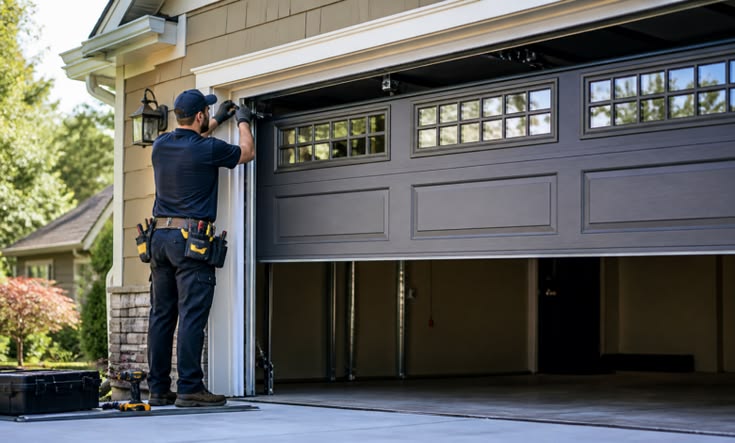
Installing a new garage door is one of the most effective ways to improve your home’s security, energy efficiency, and curb appeal. However, before you can choose the perfect garage door, you need accurate measurements. Even a small measuring error can lead to installation problems, additional expenses, or a door that doesn’t fit properly.
Whether you’re replacing an old garage door or installing one in a newly built structure, understanding how to measure your garage correctly is essential. This guide walks you through every measurement you’ll need to ensure a smooth and successful garage door installation Phoenix AZ.
Why Accurate Garage Door Measurements Matter
Garage doors are manufactured in various sizes, and every garage opening has unique dimensions. Accurate measurements help you:
- Select the correct door size
- Ensure proper track and hardware installation
- Avoid costly modifications
- Improve door performance and longevity
- Prevent delays during installation
Taking a few extra minutes to measure carefully can save significant time and money later.
Tools You’ll Need
Before you begin, gather the following tools:
- Tape measure
- Ladder
- Notepad and pen
- Level
- Helper (optional but useful)
A steel tape measure is recommended for the most accurate readings.
Understanding Key Garage Door Measurements
There are five primary measurements required when ordering a new garage door:
- Width of the opening
- Height of the opening
- Side room
- Headroom
- Backroom
Let’s look at each measurement in detail.
Step 1: Measure the Width of the Garage Opening
The width is the horizontal distance across the finished opening.
How to Measure
- Measure from the left edge of the opening to the right edge.
- Take measurements at multiple points.
- Record the widest measurement.
Most residential garage doors are available in standard widths such as:
Single-Car Garage Doors
- 8 feet
- 9 feet
- 10 feet
Double-Car Garage Doors
- 12 feet
- 14 feet
- 16 feet
- 18 feet
If your opening differs from standard sizes, you may require a custom garage door.
Step 2: Measure the Height of the Opening
The height determines how tall the garage door should be.
How to Measure
- Measure from the garage floor to the top of the finished opening.
- Check both sides of the opening.
- Record the shortest measurement.
Common residential garage door heights include:
- 7 feet
- 8 feet
Some RV garages and specialty garages may require taller doors.
Step 3: Measure the Side Room
Side room refers to the space between the garage opening and the adjacent walls.
How to Measure
Measure:
- Left side of the opening to the nearest wall
- Right side of the opening to the nearest wall
Record both measurements separately.
Why Side Room Matters
Garage door tracks and hardware require adequate side clearance.
Most standard garage door systems require:
- 3.5 to 5 inches per side for extension spring systems
- Additional space for torsion spring systems
Insufficient side room may require specialized hardware.
Step 4: Measure Headroom
Headroom is the distance between the top of the garage opening and the ceiling.
How to Measure
- Measure from the top of the finished opening upward to the lowest ceiling obstruction.
- Check for lighting fixtures, beams, ductwork, or pipes.
Typical Headroom Requirements
Manual Garage Doors
Usually require about 10 to 12 inches.
Automatic Garage Doors
Generally require 12 to 18 inches.
Low-Headroom Systems
Special track systems can operate with less clearance when necessary.
Proper headroom is essential for smooth door movement.
Step 5: Measure the Backroom
Backroom refers to the depth of the garage from the opening toward the back wall.
How to Measure
- Measure from the garage door opening to the back wall.
- Include any obstacles that may interfere with door travel.
Minimum Backroom Requirements
A general rule is:
Garage door height + approximately 18 inches
For example:
- A 7-foot door typically requires at least 8.5 feet of backroom.
- An 8-foot door usually requires around 9.5 feet.
Automatic openers may require additional space.
Step 6: Check for Obstructions
Garage door installation requires more than just measuring the opening.
Inspect for:
Ceiling Obstacles
- Storage racks
- Water heaters
- HVAC ductwork
- Pipes
- Light fixtures
Wall Obstacles
- Electrical panels
- Shelving
- Utility connections
Document any potential obstructions before ordering your door.
Step 7: Verify Floor Level
An uneven garage floor can affect installation and door sealing.
How to Check
- Place a level across the floor at the opening.
- Look for gaps or uneven areas.
- Measure differences if necessary.
Minor floor irregularities can often be accommodated with weather seals, but significant unevenness may require correction.
Step 8: Confirm the Opening Is Square
A garage opening should be as square as possible.
How to Measure
Measure diagonally:
- Top left corner to bottom right corner
- Top right corner to bottom left corner
If the two measurements are nearly identical, the opening is square.
Large differences may indicate structural issues that should be addressed before installation.
Common Garage Door Sizes
Knowing standard garage door dimensions can help you compare your measurements.
Single-Car Garage Doors
- 8′ x 7′
- 9′ x 7′
- 10′ x 7′
Double-Car Garage Doors
- 12′ x 7′
- 14′ x 7′
- 16′ x 7′
- 18′ x 8′
Many manufacturers also offer custom sizing options.
Mistakes to Avoid When Measuring
Measuring the Existing Door Instead of the Opening
Always measure the actual opening rather than the old garage door.
Ignoring Obstructions
Tracks and openers need adequate clearance to operate properly.
Taking Only One Measurement
Measure multiple points to account for variations in construction.
Forgetting Side Room and Headroom
The opening size alone is not enough for selecting a garage door system.
Not Checking Floor Level
An uneven floor can create sealing and alignment issues.
When to Consult a Professional
While measuring a garage is generally straightforward, professional assistance may be beneficial if:
- The garage has unusual dimensions
- Structural damage is present
- Ceiling clearance is limited
- Custom doors are required
- You plan to install a high-lift or vertical-lift system
Many garage door companies offer free measurement services before installation.
Preparing for Your Garage Door Purchase
After completing your measurements, organize the following information:
- Opening width
- Opening height
- Left side room
- Right side room
- Headroom
- Backroom
- Notes about obstacles
- Floor condition
Having these details readily available makes it easier to select the right door and installation hardware.
Conclusion
Accurate measurements are the foundation of a successful garage door installation. By carefully measuring the width, height, side room, headroom, and backroom of your garage, you can confidently choose a door that fits properly and operates smoothly. Taking the time to inspect for obstructions, verify floor level, and ensure the opening is square will help prevent installation challenges and costly surprises. With the right measurements in hand, you’ll be well prepared to select the perfect garage door for your home and enjoy reliable performance for years to come.