



Fashion starts with creativity. What starts as a basic concept on paper may be transformed into a well-made garment, a collection, or even a career. Courses in fashion designing may help students who have a love for clothes, fabrics, colors, style and creative expression to get the knowledge and practical basis to translate this enthusiasm into abilities that really mean something.
Training in fashion design is about much more than making pretty clothes. It entails learning about design concepts, textiles, construction processes, customer tastes, presentation and the ever changing nature of the fashion business.
Fashion designing course in Jaipur is an exceptionally intriguing place for young fashion designers. The city has a great affinity with textiles, traditional crafts, embroidery, printing, jewelry and artistic history. Contemporary fashion education reveals current design ideas and professional methods to students and inspires them with its cultural milieu. This allows for the examination of past influences and contemporary tendencies in fashion.
Discovering Fabric, Textiles & Traditional Craft
Fabric is the soul of fashion design. And the same silhouette may seem so different when made of various materials. So understanding fabrics is an important aspect of fashion education. A fashion design course may take students through the whole creative process, from research and basic drawings and move toward pattern creation, garment fabrication, styling and collection presentation. Each level brings out a distinct part of the job. Students learn how to build a concept, improve and test it and finally transform it in to a wearable product.
Students may also be taught that creativity requires technical assistance in fashion education. An inventive drawing is merely the beginning. A designer must know the properties of textiles, how clothes are manufactured, the understanding of proportions and how a design may be modified to the demands of the user. These skills are developed via experience, experimenting and instruction.
Structured learning may provide a great setting for students considering fashion as a vocation to explore a range of creative options. It may also help students recognize whether their interests lie in garment design, textile design, styling, fashion illustration, retailing, fashion communication or entrepreneurship.
Learning the basics of Fashion Design
All fashion designers need to have solid knowledge of the foundations. Before students can build complex collections they need to learn fundamental design concepts, dimensions, silhouettes, color relationships and visual balance. These fundamentals give the structure for turning innovative ideas into cohesive clothing.
Usually, fashion illustration is one of the first things students do. Sketching is a visual communication tool used by designers to convey their ideas before real prototypes are made. In this class students will learn how to draw the human body, study proportions, sketch clothing from various angles and how to display crucial design features. Manmade fabrics. Blends and other textiles react differently. Designers need to know these features before they can decide how to utilize a cloth.
Exploration of textiles may also expose pupils to surface methods. Printing, embroidery, weaving, dyeing, decoration, appliqué and other techniques may alter the visual and tactile properties of a garment. If pupils learn these strategies they may build unique ways to designing.
Traditional approaches may also be a jumping off point for current exploration. Instead of replicating traditional clothes, students might reimagine themes, patterns, embroidery techniques and textile processes to create contemporary shapes. This may bridge the gap between historical and modern fashion.
Students are encouraged to think about ethical design while studying textiles. The infusion of textile knowledge and artistic experimentation might help students become more intelligent designers. Rather than only choosing textiles for looks, students learn to see what a fabric does to the function, comfort, structure and identity of a garment.
From Patterns to Completed Garments
One of the most significant areas of design education is the journey from drawing to a tangible piece of clothing. Pattern making and garment manufacturing provide the technical skills required to translate creative ideas into usable garments.
Pattern creation is the process of designing the templates that dictate how various pieces of cloth will be cut and stitched together. Students learn about measures, proportions, seams, darts, pleats, panels, closures and other construction features. This helps children to comprehend the technical construction of a garment.
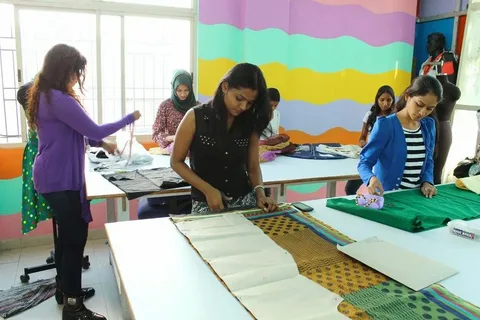
Next, garment fabrication brings the design to life. Students study methods of cutting, sewing, finishing, pressing and assembling. Working with fabric in a practical way gives a real understanding of how materials react and the effect building decisions have on the end product.
Another important element of the procedure is fitting. A garment may seem ideal on a drawing but may need to be altered when it is created in fabric. Students learn to recognize and rectify faults in movement, proportion, length and fit.
This is a hands-on method that also teaches patience and accuracy.” In fashion design there are many minor elements and the quality of these small details has a great impact on the finished garment. Good finishing, proper stitching, suitable seams and smart construction can take a design idea and convert it into a professional appearing product.
Technical abilities also enhance communication. This knowledge of building also aids the designer in communicating more properly with professional pattern makers or production teams when they subsequently work with them. They can describe how a garment fits, what details are vital, and what has to be looked at.
The journey from design to garment illustrates the connection between creative ideas and technical execution. A successful Fashion Designer has to comprehend all sides of this dilemma.
Creating a Full Fashion Line
Making a whole collection is a big step forward in a fashion student’s growth. It encourages students to look beyond just one garment and how numerous elements might fit together around a basic notion.
It generally starts with research and inspiration. A designer might draw inspiration from architecture, art, history, nature, culture, photography, social trends or personal experience. These references may be gathered and arranged into a visual direction that sets the atmosphere of the collection.
Once a concept is determined students may create a color palette, fabric direction, silhouette concepts, surface details and design drawings. These aspects should serve to provide a feeling of continuity to the collection.
When you’re designing a collection of numerous items from one idea it may be tricky, since each piece has to feel unique, yet still be part of the same narrative. Students learn how to repeat certain graphic motifs, yet modify the silhouettes, dimensions or details.
Summary
A key aspect of this procedure is sampling. A designer may make experimental pieces to try out materials, construction processes, decoration or proportions. Some ideas will work right away. Others will take plenty of effort. Experimenting in this way is a necessary aspect of creative growth.
Then the completed collection may be made ready for display. Depending on the nature of their work, fashion designing course in Jaipur students may assemble lookbooks, portfolios, pictures, exhibits or runway shows. The presentation has to be styled, accessorized, lit, photographed, modeled and visually communicated carefully.